How We Manage the Herd
Big, mature animals don't happen by accident. Here's how we manage age, genetics, and hunting pressure so there are quality bulls and bucks on the ground every season.
People ask us all the time how we grow the kind of animals we do. They want a secret, some trick, a feed formula scribbled on a napkin. The truth is there isn't one. Big mature animals come from three things working together over a long stretch of time: age, feed, and genetics. Get all three right, give it years, and don't push the land harder than it can take. That's it. We've been refining that recipe on this ground for more than thirty years, and the longer we do it the more we're convinced the basics are the whole game. Everything we manage for ties back to those three pillars.
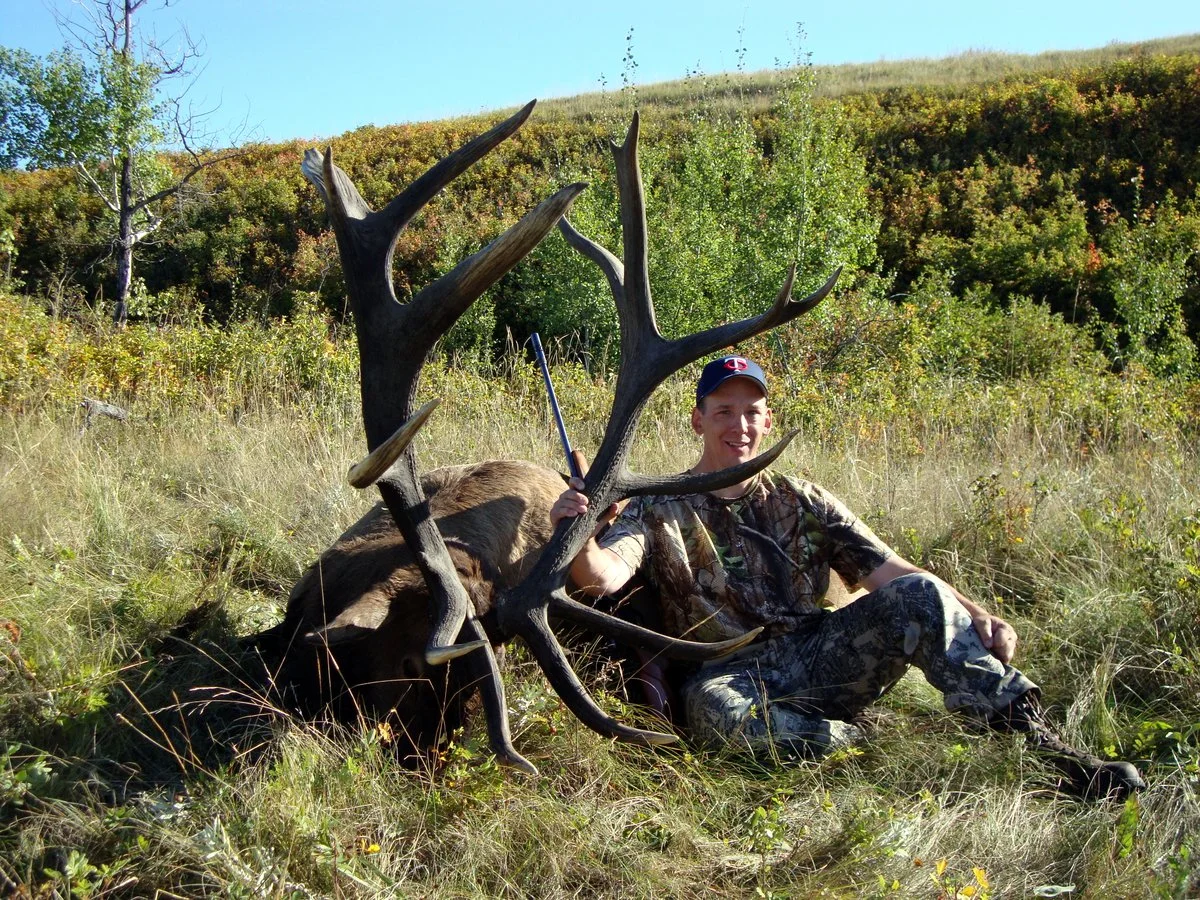
Start with age, because it's the one most outfits get wrong. An animal doesn't reach its potential until it's mature, and that takes years of leaving it alone. On the whitetail side, that means we're after deer that are four and five years old, bucks that have had time to put on real mass and grow into the kind of frame Saskatchewan is famous for. A two or three-year-old buck might look good to an excited hunter, but he's nowhere near what he'll be in another couple of seasons. So we protect the young ones. Same thinking with elk. Our management bulls start around the 300-inch, 6x6 mark, and from there it climbs all the way up to the non-typical giants past 500 inches. The biggest bull ever taken on this ranch went 628. You don't grow a bull like that by shooting him at five. You grow him by being patient, by letting good young animals walk so they can become great old ones.
Feed is the second pillar, and on this ground we've got a real advantage. The ranch sits in the North Saskatchewan River valley near Lloydminster, straddling Saskatchewan and Alberta. It's parkland and prairie, not mountains, and that mix is exactly what big-bodied animals want. You've got pine and poplar forest for cover, open grass meadows to feed in, river hills, and cutlines that animals travel and that we glass. Our Rocky Mountain elk carry big northern bodies, 1,000+ pounds, and that size doesn't happen on thin range. Good nutrition year-round is what lets an animal pour its energy into body and antler instead of just surviving the winter. We manage the feed deliberately, we don't let the herd outrun what the land can support, and that's a big part of why the animals reach the class they do.
Genetics is the third leg, and it's the one you can't fake. You can feed an animal perfectly and let him get old, but if the genes aren't there he's only going to get so big. We protect our genetics, and we've built breeding partnerships to keep strengthening the herd while it expands. The goal isn't a one-season spike. It's a deeper, stronger gene pool that pays off for decades. When you put genetics together with age and feed, you get the kind of variety we're known for, whitetail roughly in the 160 to 300-inch class and elk that range from solid management bulls all the way up to non-typical monsters. None of that is luck. It's the long game.
Here's the part that separates how we do things from a lot of operations: we keep hunter numbers low. On purpose. Far lower than the land could actually hold. We could pack in more hunters and book more days and squeeze more out of every season. We don't, and we won't. Elk hunts are limited to mature trophies dependent on the breeding program, whitetail historically around 55, and once the calendar fills, it closes. There are no draws and no tags to wait on because it's private land, so when we say we're full, we're full. That restraint is the quiet thing that makes everything else work.
Low pressure is the reason the animals behave naturally. When you're not constantly bumping deer and elk, they don't go nocturnal, they don't get stupid-spooky, and they keep moving in daylight the way they're supposed to. That's worth more to a hunter than almost anything. A mature buck that feels hunted will vanish into the thick bush and you'll never lay eyes on him. A mature buck that feels safe will work a meadow edge at last light like it's any other evening. Predictable daylight movement is a direct product of leaving the herd alone most of the year, and it's the difference between hunting ghosts and actually getting a shot at a giant.
It also makes for an honest hunt. We're not driving animals or hammering the same stands day after day. We glass the cutlines and river hills, we play the wind, we set up where the animals already want to be, and we let their natural patterns do the work. The land does the heavy lifting because we've protected the land's ability to do it. That's the whole philosophy in one sentence. You manage for the animal, the animal does what's natural, and the hunting takes care of itself.
Resting ground is a big piece of this too. Right now we run three properties, each with its own character. There's the Saskatchewan River valley ground, a classic prairie ranch that's thick bush mixed with grass and buck brush, and the lodge's own backyard down on the Blackfoot Creek valley. Having multiple properties means we can rotate, give a piece a season to settle, and never lean too hard on any single chunk of country. A fourth property opens in the fall of 2026, and that's a big part of the plan, more ground means more rest, more room for the herd to grow into, and more options to keep pressure low even as the operation expands.
I want to be straight about why we do all this, because it's easy to dress this kind of thing up in eco-buzzwords and we're not going to. We manage for age, we feed the animals well, we protect the genetics, and we don't burn the place out. We do it because it makes for better hunting and because it's the right way to run a piece of land you intend to keep for the long haul. Those two things aren't in tension. They're the same thing. A ranch that's managed for the next thirty years instead of the next thirty days is a ranch that produces mature animals year after year. Good stewardship and good hunting are the same job.
That long view is really the whole point. Anybody can have one good season. You get a string of mild winters, you take a few standout animals, you put it on the wall and call yourself an outfitter. Stringing it together for three decades is a different animal entirely. It means making decisions every year that don't pay off until years down the road, passing animals you could shoot, holding hunter numbers down when you could cash in, and putting money and patience into genetics that won't show their full value for a long time. We've made those calls, season after season, and the herd we hunt today is the proof.
It's worth saying that this is a family operation, and that matters to how the herd gets managed. Rob and his son Josh run it, and the guides on this land have twenty-plus years on it. They know every cutline, every meadow, every river hill, and they know which bulls and bucks have been walking around getting older. That kind of continuity is part of management too. When the same people watch the same ground for decades, they can tell you what's coming, which young animals are worth protecting, and how a given piece of country needs to be hunted. You can't hire that. You earn it over time.
So when a hunter asks how we grow them this big, that's the honest answer. No magic. Age, feed, genetics, and the discipline to keep pressure low and give the ground rest. Thirty-plus years of doing it the same patient way, three properties soon to be four, an expanding herd backed by real breeding partnerships, and a guarantee that we'll only get paid if you get it done. If you want to talk about a hunt, or just hear more about how the place is run, give us a call at 780-871-1747. We're happy to walk you through it. The animals are the result of the management, and the management is the whole story.