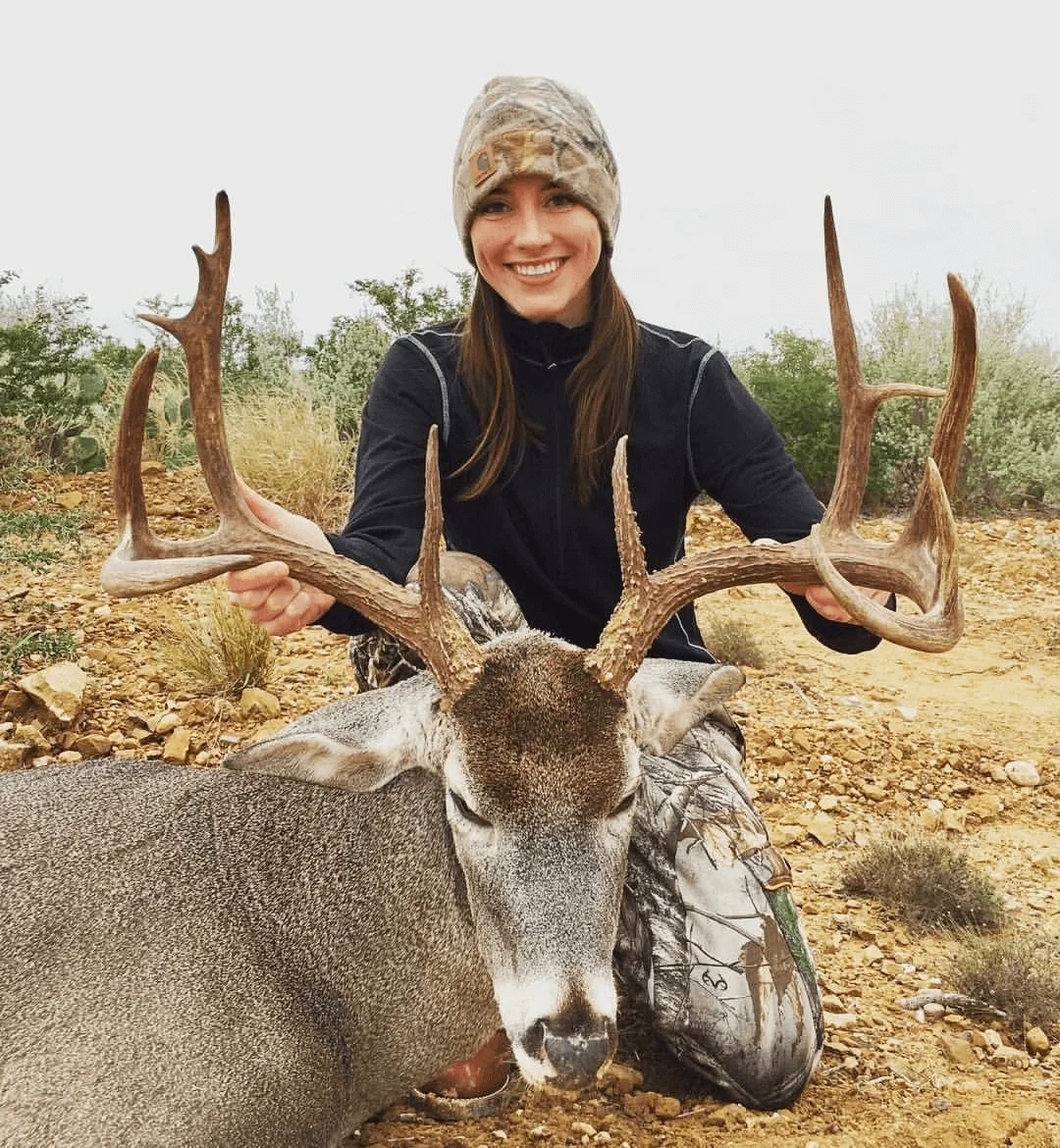
Desert Bighorn & Mule Deer in Mexico
Our Mexico hunts run with Abraham — one of the best desert outfitters in the world and a 20-year partner of Rob's. Desert bighorn, Coues deer, and giant desert mule deer.
Most folks know us for what we do up north — the whitetail and elk hunting on our private ground in Saskatchewan and Alberta. But a hunt that's been a long time coming for a lot of our guys is the one that takes them way south, down into the desert in Mexico. We run that program through Abraham, who's been Rob's partner for twenty years now. He's not a booking agent we found in a magazine. He's a guy Rob has known and worked alongside for two decades, and he's about as good as it gets when it comes to managing desert mule deer and bighorn sheep. When we send a hunter down there, we're sending them to someone we trust with our own name.
Let's talk about the bighorn first, because that's the one most people are after. A desert bighorn ram is one of those animals a hunter chases his whole life and maybe never gets a crack at. The country, the rules, the sheer difficulty of it — everything stacks against you. Which is exactly why pulling it off means so much. On Abraham's ground, forty-inch rams are not unusual. Let that sink in for a second. Plenty of guys hunt sheep their entire lives hoping to break thirty-something. Down there, a forty-inch ram with heavy bases and good mass is a real, repeatable result of years of careful management, not a fluke. That doesn't happen by accident. It happens because somebody has been protecting those animals and managing the herd the right way for a long time.
The other thing that makes this hunt work the way it should is the quota. Abraham holds a good exportable-ram quota, which matters more than people realize until they're standing there with a dead ram and a head full of questions about how it gets home. A lot of sheep hunting around the world is tangled up in tags, draws, and export headaches that can leave you with a trophy you can't legally bring back. That's not the situation here. The rams are managed, the quota is real, and the ram you take is one you can actually export and hang on your wall. We handle the paperwork side the way we always do, so you're not the one trying to sort out customs in a language you don't speak.
Sheep aren't the only thing down there worth the trip. The desert holds Coues deer too, and if you've never glassed up a Coues buck, you're in for a different kind of hunting altogether. They call them the gray ghost for a reason. A mature Coues buck will stand stone-still in a wash full of brush a couple hundred yards off and you'll look right past him a dozen times. This is a glassing hunt in the truest sense — you sit behind good glass, you pick the country apart inch by inch, and you wait for a tine or an ear or the wrong shade of gray to give one away. It's patient, deliberate hunting, and when it comes together it's some of the most satisfying deer hunting there is.
And then there are the desert mule deer, which is a whole separate reason a guy might book this hunt. These aren't the little fence-line mulies some hunters picture. Abraham's country grows big desert mule deer — heavy, wide, mature bucks that live in some unforgiving terrain. Between the muleys, the Coues, and the bighorn, a hunter can put together a combination of animals down there that's tough to match anywhere else on the continent. A lot of guys go for the sheep and end up just as fired up about the deer. It's the kind of country where you keep finding more than you came for.
Now I'll be straight with you about what this hunt actually is, because I'd rather you hear it from me than figure it out the hard way on day one. Sheep country is hard. It's vertical, it's rocky, and it's hot. You glass from one ridge, you spot an animal, and then you go get him — and getting to him usually means putting boots on ground that doesn't want you there. There's climbing. There's heat that'll wear you down if you're not ready for it. There's a lot of sitting behind glass followed by hard, fast movement when the moment comes. This is a physical hunt, no two ways about it. If you've let yourself go soft, the desert will find out quick.
But here's the flip side of that coin. The hunts that ask the most of you are the ones you remember the longest. Nobody tells stories about the easy ones. They tell stories about the ram they climbed all day for, the Coues buck they finally picked apart at last light, the country that beat them up and gave them the animal of a lifetime anyway. Rugged and unforgettable go hand in hand down there. If you want a hunt you'll still be talking about twenty years from now, this is one of them. Just come ready to work for it.
Getting there is simpler than you'd guess for a hunt this remote. You fly into either Hermosillo or Chihuahua, depending on which camp you're headed to and what makes sense for your trip. From the airport, you're not on your own — Abraham or his staff meet you and take it from there. From the airport it's about a two-hour drive into camp. On some hunts, depending on how far back the country sits, you'll get a helicopter into camp instead of the drive. Either way, the travel side is handled by people who do this constantly. You're not renting a truck and trying to navigate desert roads with a phrasebook in your lap.
While we're on travel, let me clear up one thing so there's no confusion. The fly-in, met-by-staff, drive-or-helicopter-to-camp setup is how Mexico works — that's Abraham's country and Abraham's logistics. Our Canadian hunts run completely differently, so don't mix them up in your head. Up north there's no airport pickup, no helicopter, and you rent a vehicle and drive yourself in. Mexico is its own animal with its own way of doing things, and the door-to-camp handling that Abraham's crew provides is part of what makes a hunt that far out feel manageable.
The camp and the guiding are a big part of why this works as well as it does. Abraham didn't build a reputation for managing sheep and mule deer by cutting corners. The guides know that country cold — where the rams hold, how the muleys move, where a Coues buck is likely to be hiding when the sun's wrong. That kind of knowledge is the difference between glassing a ridge for an hour and walking away empty, or glassing the right ridge and finding what you came for. You're hunting with people who live and breathe that desert. When you're chasing an animal as hard to come by as a desert bighorn, that local know-how is worth more than any piece of gear in your pack.
Think about what a forty-inch desert ram actually represents for a second. It's an animal a lot of serious hunters consider the high point of North American sheep hunting, and a good number of them never get the chance at one. Between the difficulty of the country, the management it takes to grow rams like that, and the quota and export situation that lets you legally bring one home, all the pieces have to line up just right. On Abraham's ground, after twenty years of him doing it the right way, they do. Add in the Coues and the desert mule deer and you've got the makings of a trip that can stand on its own as the hunt of a lifetime — or pair up nicely with a season you spend with us up in Canada.
If a desert hunt has been sitting on your list — and for a lot of hunters the sheep is the one tag that's been hanging out there for years — this is the way to go after it. You'll be hunting with a partner Rob has stood behind for two decades, in country that produces the kind of rams most guys only see in photos, with the deer hunting to back it up and a crew that takes care of you from the airport to the field. It's rugged. It's physical. It's hot, and it'll test you. And every honest hunter who's done it will tell you it was worth every step. If you want to talk through dates, which camp fits what you're after, or how the bighorn quota works, give us a call at 780-871-1747 and we'll get you pointed in the right direction.