What Rifle to Bring
Bring the rifle you shoot well — that matters more than caliber. Here's our honest take on guns, optics, and getting ready before you show up.
Every season we get the same question before guys fly up here, and it's a good one: what rifle should I bring? The honest answer hasn't changed in 30 years of guiding this country. Bring the rifle you actually shoot well. That matters more than the caliber stamped on the barrel. A hunter who knows his rifle cold, who can settle the crosshairs and break a clean shot without thinking about it, will outperform a guy carrying some hotrod magnum he flinches through every time. Confidence in your setup beats horsepower on paper, every single day of the week. So before you start shopping for something new, take a hard look at the rifle already in your safe. Odds are it's plenty of gun.
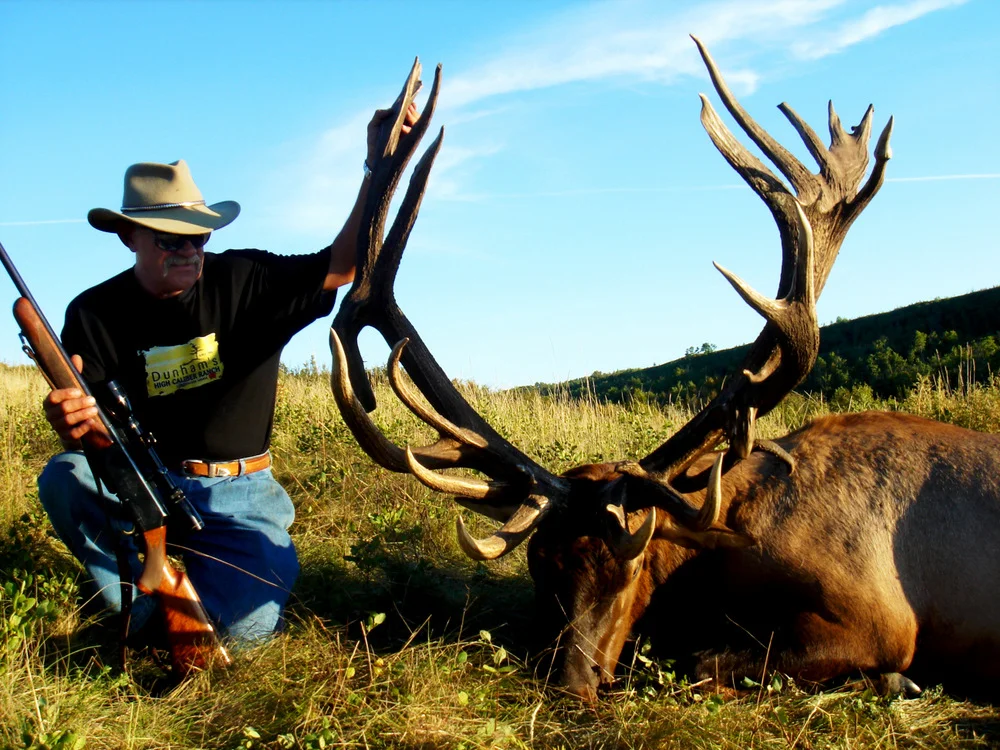
That said, you're hunting big northern animals up here, so let's talk specifics. Our Rocky Mountain elk carry serious weight, bulls in the 700 to 1,200 pound range, and that's a lot of animal to put down cleanly. A good number of our elk hunters run a .300-class rifle, and that's a sensible choice. It throws enough bullet to punch through heavy shoulder bone and reach the vitals on a big-bodied bull, even when the angle isn't perfect. You don't need it. Plenty of bulls have died to lesser calibers with a good bullet and a steady hand. But if you're trying to decide what to bring for elk, a .300-class is a fine answer and nobody up here will second-guess it.
For our whitetail, you've got more room. These are mature Saskatchewan deer, four and five year old bucks with real mass on them, and they deserve respect, but you don't need an elk cannon to anchor one. Anything in the standard deer-caliber range that you shoot accurately will do the job. The same rule applies: pick the rifle you trust. A well-placed shot from a moderate caliber beats a marginal hit from something bigger every time, and a buck that runs off into thick bush at last light is a long night for everybody.
Here's the part people underestimate. Show up zeroed. We confirm your zero at the range on arrival day, that's built into the schedule, but the range check is meant to catch what airline baggage handlers did to your scope, not to teach you your rifle. Do your homework at home first. Shoot it from field positions, off sticks, off a pack, sitting and kneeling, not just off a bench with sandbags. Know your point of impact at the distances you're likely to see here. The arrival-day check confirms everything survived the trip, and then you're hunting that same afternoon. If you've practiced, that range session takes a few rounds and you're done. If you haven't, you'll find out the hard way that a bench groove doesn't mean much when a bull's screaming at you across a cutline.
Cold weather changes things too, so be ready for it. We hunt parkland and prairie, river hills and open meadows, and the rut runs through September and October when mornings can bite. Practice in conditions that look like what you'll face. A trigger feels different through a glove, and you should know whether you can run yours gloved or whether you need to bare a finger at the moment of truth. Bring a couple boxes of the exact ammo you zeroed with, same brand, same load, same bullet. Don't switch loads at camp and expect the same point of impact. And keep your ammo somewhere stable, not bouncing around in a cold truck box for a week, so it behaves the way it did when you sighted in.
Optics earn their keep on this ground, maybe more than the rifle does. Bring good binoculars. We glass cutlines, field edges, the seams where pine and poplar meet open grass, and the places where animals slip between bush and meadow. A solid pair of binos turns a gray smudge at the far end of a cutline into a bull worth moving on, and it does it without burning your eyes out by mid-morning. Cheap glass costs you animals you never even knew were there. Spend where it counts. You'll spend more hours behind your binoculars than behind your trigger, and that's how it should be.
If you're shooting a bow, add a rangefinder to that list. It's not optional for archers. Distances out here can fool you, especially across open ground or downhill into a river-bottom draw, and a few yards of misjudged range is the difference between a clean kill and a bad afternoon. Range your shooting lanes before things get busy, range the landmarks around a setup while you're waiting, and you'll be ready when a bull commits. The rifle hunters can lean on the range check and a known trajectory; the archers need to know their numbers cold and trust their gear.
And yes, we welcome archery, and it's flat-out great during the rut. September and October is when the bulls lose their minds, and a well-called bull coming in hot to a cow call is about as good as elk hunting gets. Bow range and bugling bulls go together. The rut is also our most popular stretch, it sells out roughly a year ahead, so if you've got your heart set on calling in a bull with a bow, don't sit on it. The calendar fills and then it's gone, and because this is private land with limited hunts each season, there's no waitlist magic to bail you out.
Now the paperwork, because for our U.S. hunters this is the question that causes the most hand-wringing and it really shouldn't. Bringing your own firearm across the border into Canada is a routine, well-worn process. Your pre-trip packet includes the firearm import forms you'll need, and we walk you through exactly how to fill them out and what to expect at the crossing. Thousands of American hunters do this every year. Fill out the form correctly, declare honestly, and it's a non-event. The packet also covers your travel details and a full gear list, so you're not guessing at any of it.
That said, if traveling with a gun feels like more hassle than you want to deal with, talk to us about options. Some hunters simply don't want to fly with a rifle, deal with locked cases, or sort out the import forms, and that's completely fine. Give us a call before you book your flights and we'll sort out what makes sense for your hunt so you're not stuck carrying a gun across two borders if you'd rather not. The point is, don't let the firearm logistics be the thing that keeps you from booking. It's the easiest problem on this whole list to solve.
A word on how you'll actually get here, since it ties into your gear planning. You fly into Edmonton or Saskatoon, both about two and a half hours from the lodge, then rent a vehicle and drive in. There's no airport pickup and no chopper to the lodge, this is a working ranch, not a resort, so pack your rifle case and gear knowing you'll be hauling it from the airport yourself. Plan your case accordingly. Check-in runs around eleven in the morning, you'll get lunch, we confirm your zero at the range, and then you're into a half-day hunt that same afternoon. So the rifle you bring needs to be ready to hunt the day you arrive, not the day after.
Let me boil it down. Bring the rifle you shoot well, because confidence beats caliber. A .300-class is a smart pick for our big elk; for whitetail, a good standard deer caliber you trust is plenty. Show up zeroed, practice from field positions at home, and shoot in the cold with gloves so nothing surprises you. Bring quality binoculars and, if you're an archer, a rangefinder you trust. Archery is welcome and outstanding in the rut, so book early because the rut sells out a year out. And if the firearm import paperwork has you second-guessing the whole trip, don't let it, the forms are in your packet and we'll help, or we'll talk through other options. Got questions about any of it, including what to bring? Call us at 780-871-1747 and we'll get you squared away. Show up with a rifle you trust, glass that works, and a little practice behind you, and the rest is just hunting.